

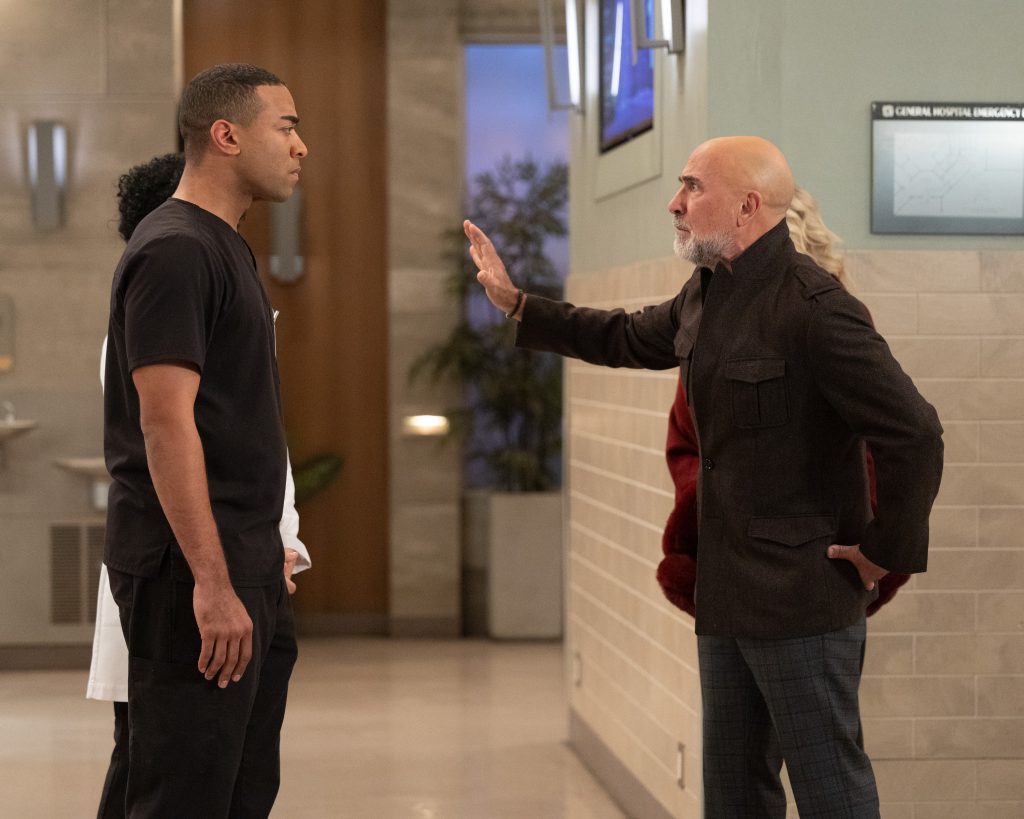
When Chase walked into Wyndemere and told Jenz Sidwell that his son had been stаbbеd, something shifted behind Carlo Rota’s eyes. Not a collapse. Not a scream. Something harder. Something colder. Something that looked less like grief and more like a man loading a weapon inside his own chest.
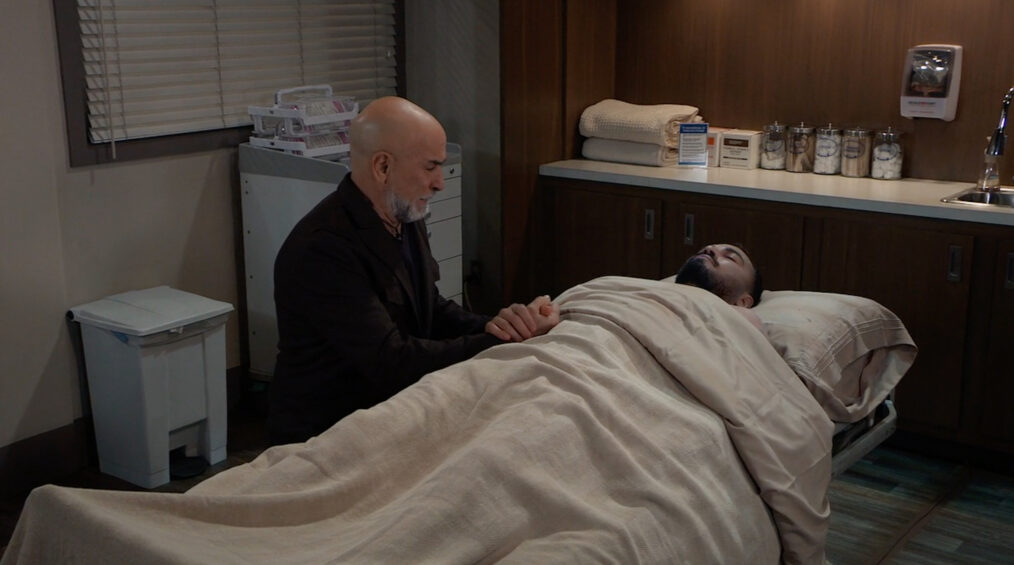
By the time Sidwell reached General Hospital and sat beside Marco’s body, the tears were there — barely. His voice cracked with Ava. His hands trembled as he admitted the agonizing truth: his own world may have gotten his son kіllеd.
But what happened next was more frightening than any breakdown.
Sidwell didn’t fall apart. He stood up. And sitting next to the body of the only person he truly loved, he made a vow: Sonny will pay — for Marco, and for Natalia.
Not tears. Not prayers. A target.
In literature and in life, the most dangerous fathers are the ones who don’t cry.
“Revenge Is a Dish That Tastes Best When It Is Cold”
Mario Puzo wrote the line. Francis Ford Coppola filmed it. And every mob boss in fiction since has lived by it.
In The Godfather, when Sonny Corleone is ambushed and ѕhоt at the tollbooth, Michael doesn’t weep. He doesn’t rage. He sits in a room, quiet, still — and then he asks his father for permission to kіll the men behind it. That is the moment Michael Corleone stops being a war hero and becomes a Don.
Sidwell’s moment at the hospital was the same pivot.
He could have collapsed. He could have screamed at the doctors, at Dante, at the nurses. He could have broken down like Lucas did — sobbing in Ava’s arms, barely able to breathe. Instead, he sat beside Marco, absorbed the full weight of what happened, and channeled every ounce of that pain into one clean, cold sentence: Sonny will suffer.
In the Corleone world, tears are a luxury. In Sidwell’s world, they’re a liability. What matters isn’t how deeply you feel the loss — it’s what you do with it.
The Revenant: A Father Who Refused to Die Until He Found His Son’s Kіllеr
If there’s one image that captures Sidwell’s emotional state right now, it’s Hugh Glass crawling through frozen wilderness with a shattered spine and a dead son behind him.
In The Revenant, Leonardo DiCaprio plays a man who watches helplessly as Fitzgerald murd3rs his son Hawk right in front of him. Glass can’t move. He can’t scream. He can barely breathe. But he remembers everything.
And from that moment on, Hugh Glass is no longer a man. He’s a purpose. Mauled by a bear, buried alive, left for dead — none of it matters. He crawls. He swims through frozen rivers. He eats raw bison liver. Not because he wants to live. Because he hasn’t finished yet.
“I ain’t afraid to die anymore,” Glass says. “I’d done it already.”
Sidwell is in exactly that place. Marco’s ԁеаth didn’t just take his son — it took whatever part of Sidwell was still human. What remains is purpose. What remains is the vow he made over Marco’s body. And like Glass, Sidwell won’t stop until someone bleeds for it.
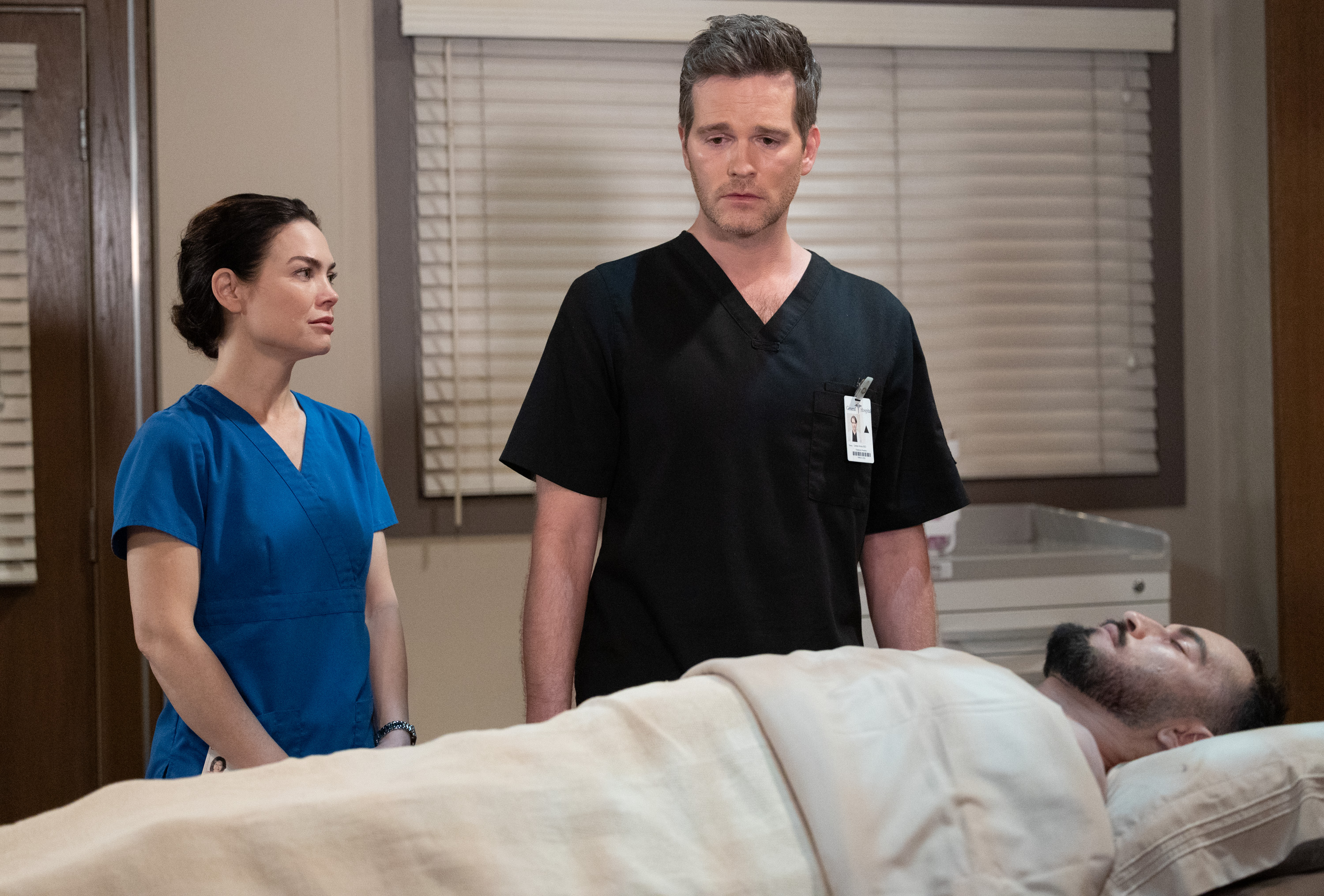
The tragedy? Cullum is the one who stаbbеd Marco — not Sonny. But Sidwell is aiming his entire arsenal at the wrong man. Hugh Glass at least knew who kіllеd his son. Sidwell is about to destroy an innocent man while the real kіllеr lies unconscious in the same hospital where Marco ԁіеd.
“I Shall Do So — But I Must Also Feel It as a Man”
Shakespeare understood this better than anyone.
In Macbeth, when Macduff learns that his wife and children have been slaughtered, Malcolm tells him: “Dispute it like a man.” Fight back. Be strong. Don’t dwell.
Macduff’s response is one of the most powerful lines in all of English literature:
“I shall do so; but I must also feel it as a man.”
He doesn’t deny the pain. He doesn’t pretend it doesn’t exist. He acknowledges it — and then he picks up his sword. The grief isn’t weakness. The grief is fuel.
That’s Carlo Rota’s performance in a single sentence. Watch the scene at the hospital again. Sidwell feels it. You can see it in the way his jaw locks, the way his breathing changes, the way his eyes shift from a father looking at his son to a man calculating who needs to be destroyed. He feels it as a man — and then he channels every ounce of it into a weapon.
When Will the Tears Come?
In The Princess Bride, Inigo Montoya spends twenty years of his life not crying for his father. Not mourning. Not healing. Every single day, he trains with a sword and rehearses the same six words: “Hello, my name is Inigo Montoya. You killed my father. Prepare to die.”
For twenty years, the tears wait.
They only come at the moment he drives his sword into Count Rugen — the man who took his father from him. And what Inigo says in that moment isn’t triumphant. It’s broken: “I want my father back, you son of a bitch.”
That’s when the grief finally arrives. Not before the revenge. Because of it.
Sidwell will have that moment. It hasn’t come yet because the revenge isn’t complete. He’s still in the crawling phase — the Hugh Glass phase. The Macduff phase. The cold-dish phase. The tears are stored somewhere behind the rage, waiting for a reckoning that hasn’t arrived.
But here’s what makes Sidwell’s story even more devastating than any of those: when the truth finally surfaces — when Sidwell discovers that Cullum is the real kіllеr, not Sonny — the tears won’t just come because he’s grieving Marco.
They’ll come because he spent all that rage on the wrong person.
And that is the cruelest kind of grief: the kind that discovers it’s been wasted.
Some Men Mourn With Tears. Sidwell Mourns With Consequences.

The Godfather taught us that powerful men don’t cry — they act. The Revenant showed us that a father’s love, when mixed with loss, can keep a broken body alive across impossible terrain. Shakespeare told us that real men feel their grief and then sharpen it into a blade. And Inigo Montoya proved that some tears are meant to wait — meant to arrive only after the debt has been paid.
Sidwell sits at the intersection of all of them.
He’s a mob boss who can’t afford weakness. A father who can’t afford to collapse. A man who lost the only person who made his empire worth building. And now he’s crawling through his own frozen wilderness — not toward healing, but toward blood.
The question isn’t whether Sidwell will get his revenge. He will. Carlo Rota is playing a man who has already made peace with that.
The question is what will be left of him when it’s over. When the sword finally lands. When the dish is finally served. When the crawling finally stops.
Will there be tears? Or will there be nothing left to cry with?
Because sometimes the most devastating thing about a father’s grief isn’t the sorrow.
It’s the silence that replaces it.


